Can Robots Learn Surgery? Open Data, Foundation Models, and the Road to Surgical Autonomy
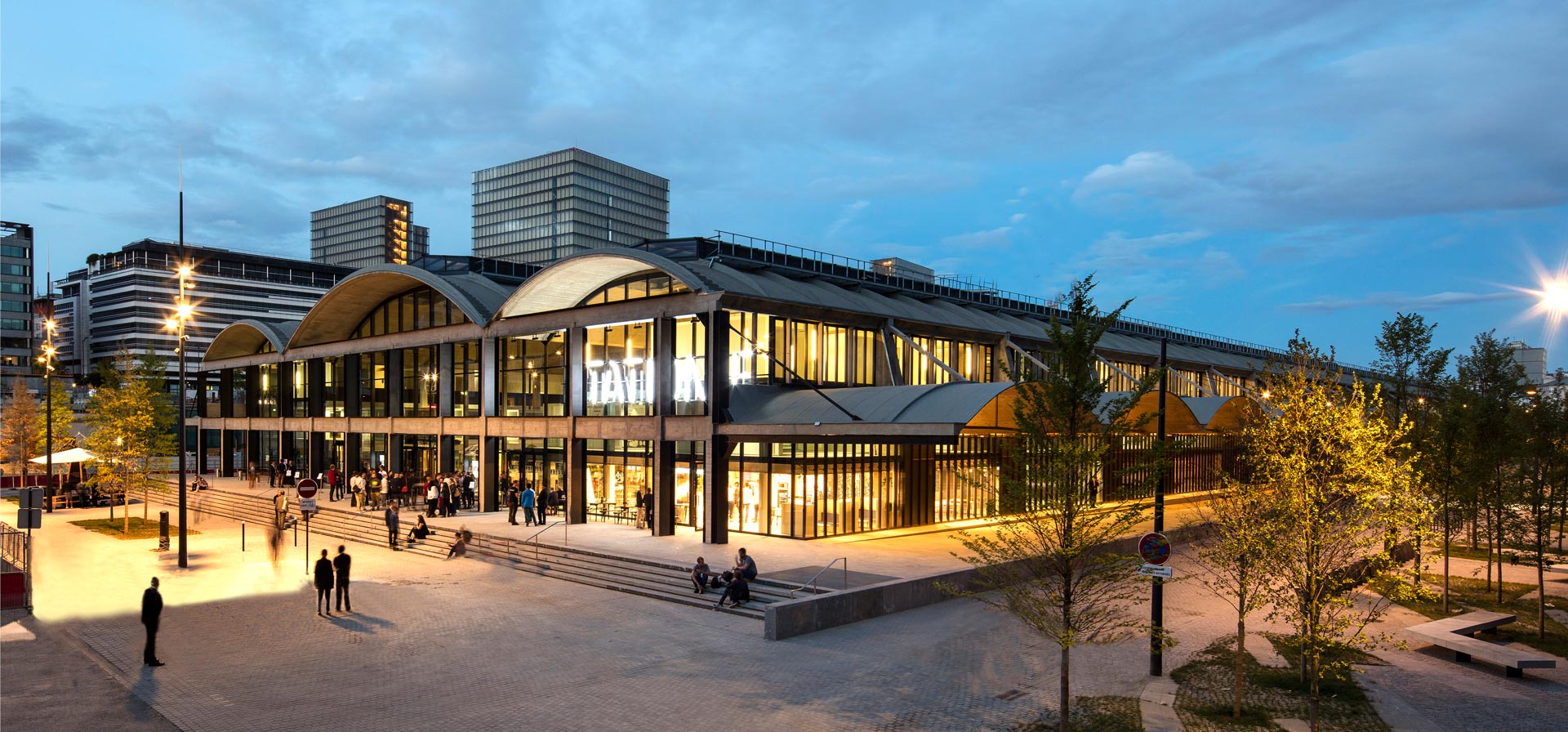
DateMay 6Time15:40 - 16:05Location Founders Cafe
Can robots learn surgery the way humans do — by observing, practicing, and improving?
Progress has long been limited not by models, but by fragmentation: each lab and robot platform produces incompatible data, preventing reuse and scale. Healthcare AI has been mostly a perception game, but real clinical impact requires doing — precise, adaptive, physically-grounded action.
In this talk, I will present Open-H Embodiment, an open collaboration across 35+ institutions to build the first shared data foundation for healthcare robotics. By standardizing on LeRobot, Open-H unifies 778 hours of multimodal data spanning surgical robotics, ultrasound, and endoscopy into a single interoperable dataset covering simulation, benchtop, and real clinical procedures across a diverse range of robot platforms.
This shared foundation enables a new paradigm: training general Vision-Language-Action (VLA) foundation models like GR00T-H across diverse systems, then fine-tuning per task and robot — an Open-X-style approach applied to surgery for the first time. Open-H anchors a fully open stack: dataset, model, and world simulator (Cosmos-H), making the entire pipeline reproducible and extensible.
At Moon Surgical, we were one of the core contributors building real-world data pipelines collecting multimodal trajectories on the Maestro system, and helping bridge the gap from foundation model training to on-device inference and execution.
The key lessons are clear: standardization is harder than modeling, data quality dominates performance, and real-world constraints i.e. latency, embodiment differences, closed-loop control define what actually works in practice.
No single institution can collect enough data or solve embodiment diversity alone. Open standards, shared models, and community-owned infrastructure are not idealistic; they are the only viable path to scalable robotic intelligence in healthcare. This talk is about more than a dataset. It's about building the open infrastructure that will make surgical autonomy possible at scale.
 Speaker Slides
  Photo Album